
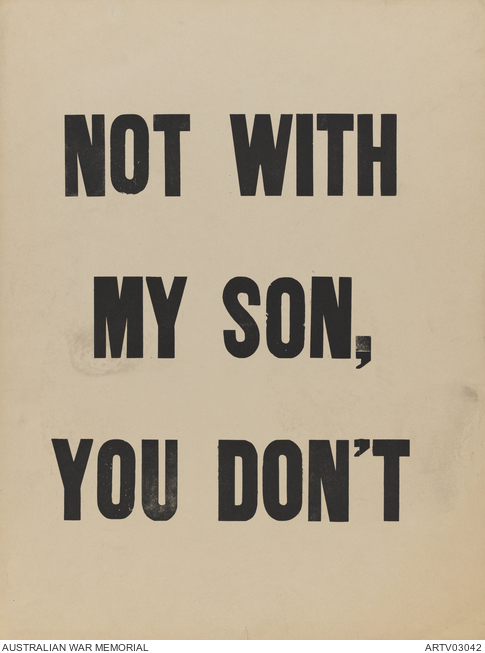
Oh, so you’re wondering why the history lesson, huh? Well, it’s simple: knowledge is power. Understanding the past can shape our future. So, maybe it’s just good to know, don’t you think? Plus, Anzac Day is approaching and some of the stories like this one, unless you lived through the time, may not know?
In the sixties, ‘Save Our Sons’ campaign in Australia was a remarkable display of courage and determination by women who fought for what they believed in – this time, for the sake of their sons. During the sixties, Australia’s ‘Save our Sons’ campaign fiercely opposed conscription and the Vietnam War. Why? Their sons were too young to vote, yet the government sought to send them off to fight in a foreign conflict unrelated to Australia where they could face their own death.
The Menzies government has made a reckless decision on Vietnam which this nation may live to regret. It has decided to send Australian soldiers into a savage, revolutionary war in which the Americans are grievously involved, so that America may shelve a tiny part of her embarrassment… It could be that our historians will recall this day with tears.
The Australian newspaper, April 1965
The sixties was bold, outspoken and volatile and to understand it better, let’s take a little walk down memory lane. Some may nostalgically reminisce about the 60s, while others might have stumbled through the decade. And then there are those who missed it altogether… Can you believe it? In other words, they missed out on the whole defining era.
The 60s marked the birth of a revolutionary movement for freedom and acceptance. It was a time of radical change and rebellion. From the bold mini skirts to the free-spirited ideals of love and peace championed by the hippies, and the passionate protests of the baby boomers, coupled with the culture of sex, drugs, and rock ‘n roll. This era blazed with a fiery mix of hope and defiance.
For those who were too young or not yet born, the sixties were a time when people passionately fought for human rights. It was a time of profound social and cultural change, marked by important movements for civil rights, women’s rights, and anti-war protests. This decade witnessed the rise of influential leaders like Martin Luther King Jr., who advocated for racial equality and justice, as well as the widespread activism of the youth, who questioned traditional values and sought to challenge the status quo.
I have a dream that one day this nation will rise up and live out the true meaning of its creed — we hold these truths to be self-evident: that all men are created equal.” “Let us not seek to satisfy our thirst for freedom by drinking from the cup of bitterness and hatred.”
Martin Luther king jr. 1963
The spirit of the sixties was characterized by a profound sense of idealism and an unwavering belief in the power of collective action. This transformative era witnessed pivotal moments that continue to echo through history, serving as enduring symbols of courage and progress. The passage of the Civil Rights Act of 1964 stands as a monumental achievement, marking a significant step towards equality and justice. Similarly, the landmark Supreme Court case of Roe v. Wade in 1973 remains a touchstone in the ongoing struggle for women’s rights and reproductive freedom.
The meeting of the Vietnam War and the anti-war, civil and women’s rights movements, marked a monumental shift in social and political paradigms. With conflicting viewpoints on war, societal transformation, and individual liberties, the reverberations of that epoch are still felt today, particularly in the face of global upheavals. Delving into that period may yield invaluable insights for tackling contemporary dilemmas and forging unity.
In Australia, the peaceful ‘Save Our Sons’ (SOS) campaign against conscription during the Vietnam War could inspire us as we face today’s challenges.
Let’s face it … the 60s shattered traditional norms, where even mothers dared to defy the status quo. The ‘Save Our Sons’ (SOS) movement in Australia, which lasted from 1965 to 1972, witnessed courageous mothers standing up against conscription, passionately advocating for their sons to avoid the Vietnam War. This era in Australian history was truly extraordinary, and their resolute determination unquestionably left a lasting impact as they allied with other conscientious objectors to fiercely defend their beliefs and emerge victorious over the conscription issue.
Under Labor, there will be no Australian troops in Vietnam after June 1970.
Gough Whitlam, 1969 election policy speech
We will abolish conscription forewith. It must be done not just because a volunteer army means a better army, but because we profoundly believe that it is intolerable that a free nation at peace and under no threat should cull by lottery the best of its youth to provide defence on the cheap.
Australian Labor Party policy statement, 1972
A new era dawned as Gough Whitlam assumed the role of Australia’s prime minister, ushering in a government that promptly abolished national service and conscription. The enactment of the National Service Termination Act of 1973 on June 21, 1973, stands as irrefutable evidence of their resolute resolve.
The ‘Save Our Sons’ campaign in Australia stands as a powerful example of successful nonviolent resistance against conscription. It refused to be tainted by politics, instead embodying the raw determination and love that any mother would exhibit for their sons. Five mothers within the SOS became known as the Fairlea Five and there is an interesting read below along with the success of ‘Save Our Sons’ campaign. These women and mothers were exceptional with their unwavering determination and fervour and played a pivotal role in bringing about this momentous change!

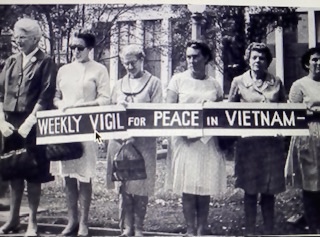
It’s important to recognise the social and political context of the sixties and the complex issues that defined the era. The emphasis on human rights was a response to entrenched discrimination and inequality, and it paved the way for significant legislative and societal changes that continue to resonate today. While each generation may have its own priorities and challenges, the lessons of the sixties remind us of the enduring importance of standing up for justice and equality.
The impact of the sixties and its legacy serves as a poignant reminder of the transformative power of unified action and the enduring influence of impassioned advocacy. As we navigate the complexities of the modern world, the spirit and legacy of the sixties continue to inspire and guide the pursuit of a more equitable and just society for all.
 even-stevens